

Rosario Cajucom-Bradbury: Global FWN100™ Acceptance Speech on Behalf of the Most Influential Filipina Women in the World, 2016
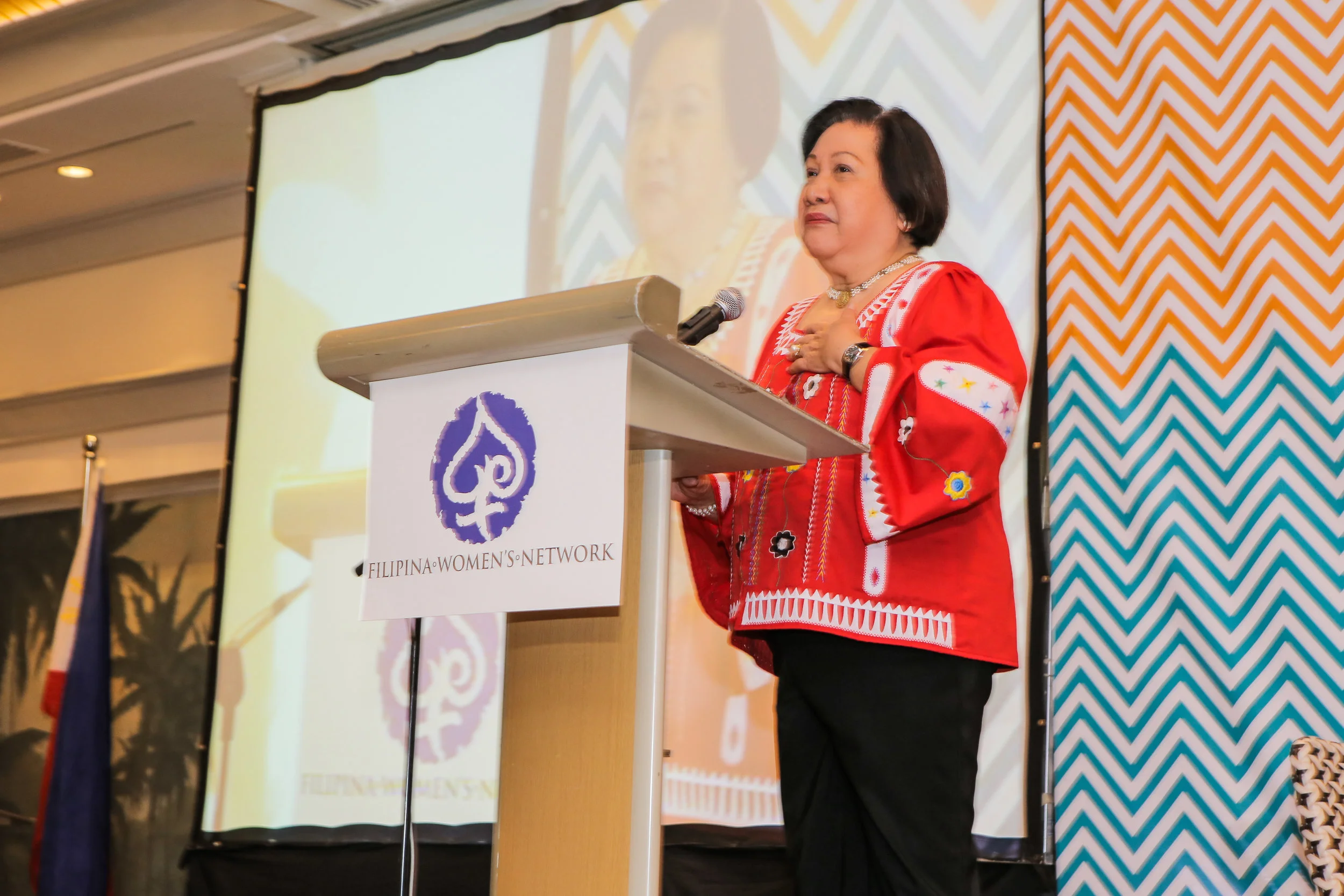
Rosario Cajucom-Bradbury (Global FWN100™ '16) Adviser to The Wallace Business Forum (WBF), Former Managing Director & CEO, SGS Philippines & SGS Gulf Ltd. ROHQ Former Chairwoman of Philippine Swiss Business Council delivers the Global FWN100™ Acceptance Speech on behalf of 2016's Most Influential Filipina Women in the World.

Rosario Cajucom-Bradbury (Global FWN100™ '16) Adviser to The Wallace Business Forum (WBF), Former Managing Director & CEO, SGS Philippines & SGS Gulf Ltd. ROHQ Former Chairwoman of Philippine Swiss Business Council delivers the Global FWN100™ Acceptance Speech on behalf of 2016's Most Influential Filipina Women in the World.
Greetings Honored Guests and Dignitaries,
I am pleased to welcome you to the Global FWN100™ Gala Awards Dinner Ceremony at the 13th Filipina Leadership Global Summit.
Tonight we celebrate 100 women who have reached the heights of excellence in their respective fields. Some in corporate business, some in government, some in non-profit, all of whom have demonstrated impact, innovation, involvement, femtorship, professionalism, and sustainability in their respective areas of contribution. In making the awardee selection, the selection committee reviewed elements of leadership, challenge, and ownership across each of the candidates’ qualifications to make its selection. Those nominees who demonstrated the highest level of attainment across all of these elements are here with us tonight.
In attendance, we have those 100 of 2016's Most Influential Filipina Women around the globe. We have 10 countries represented including 5 awardees from Europe, 11 awardees from North America, 4 awardees from the Middle East, and 49 awardees from Asia, including 46 awardees from right here in the Philippines.
We also have dignitaries representing countries who have made a special commitment to be with us tonight. We are ever so grateful to these busy individuals for taking the time out of their hectic schedules to visibly demonstrate the importance of Filipina Women taking on leadership roles around the world and making a meaningful impact in their respective communities and greater societies.
I'd also like to take a moment to thank this year’s event sponsors. Our Ninang sponsors, Ramar Foods International and Wells Fargo, our Kababayan sponsors AT&T and Chevron, our Kasama sponsors, Seven Seven Corporate Group, The Filipino Channel, and the Golden State Warriors. And our many Kaibigan sponsors who have all helped to make this years Global Summit an outstanding success.
Of course, I want to welcome and thank the hundreds of friends, relatives, children, and spouses who are here (and not here) with us tonight to celebrate their mother’s, their daughter’s, their wives’, their sister’s, their friend’s, their colleague’s incredible achievement, not just this past year, but the years of dedication, painstaking work and effort to establish their careers and achieve the pinnacle of success in their respective endeavors. It is these family and friends who have accepted the sacrifice of time and distance while their family member or friend has pursued their dream. On behalf of the 100 awardees tonight, we thank you most of all.
Lastly, I'd like to recognize the young femtees in the audience. FWN is extremely dedicated to the development of young Filipinas, helping to support and guide you on your path to leadership roles and career and life success. We hope your time here tonight, in the presence of 100 women who have already accomplished what you may dream to someday achieve, in some small way, can help to inspire you on your desired path.
FWN began back in 2002 in San Francisco, California with the idea that one small group could make a real change in society, and particularly in the lives of Filipina women. 13 years later, Marily Mondejar, the founder and CEO of FWN and the countless others who have supported FWN and participated in its growth and development along the way, can certainly look back with great pride on what has already been accomplished to date, and can look forward with great anticipation to the road ahead. Next year's summit and gala celebration will take place in Toronto, Canada, 2018 in London, England, my personal favorite, 2019 in Hawaii, and the Pinay Power 2020 reunion in Washington DC, right in time for the next U.S. presidential election.
A brief personal aside: I first became aware of FWN last year, when I attended the 2015 Gala event in San Francisco and met an amazing group of female role models. Shortly thereafter, FWN provided me with an opportunity to fulfill a long sought dream. In my college days, I was a theater arts major. When I learned FWN was staging the Vagina Monologues in San Francisco in honor of the comfort women of WWII, I jumped at the opportunity. Fortunately, I still retained my theater arts skills, kept active over the past 10 years in the office of the CEO, where much of what we do as chief executives, is stage performance. Through the Vagina Monologues production, I was introduced to Marily and again, so many incredible women, each with a personal story to tell. My path of engagement with FWN was set.
But tonight is not about me, or even about Marily and the rest of the Filipina Summit steering committee, headed this year by Myrna Yao. Tonight is about this year’s 100 awardees. Tonight is about celebrating and savoring the fruits of your countless years of effort culminating in the collective celebration this evening.
In closing, I'd like to close as I do with all my presentations, with words of wisdom, from my wise-beyond-his-years, newly teenage son. His latest writing, a poem, is called Time is no Thief. In this poem, he writes that it is not “Time which wastes time, but only us.” Let us not waste this moment tonight to enjoy the company of each other and to take the moment to positively reflect upon the incredible accomplishments achieved by those in this room tonight. Please do not waste this chance.
Thank you and enjoy... congratulations to 2016’s 100 Most Influential Filipina Women in the World!
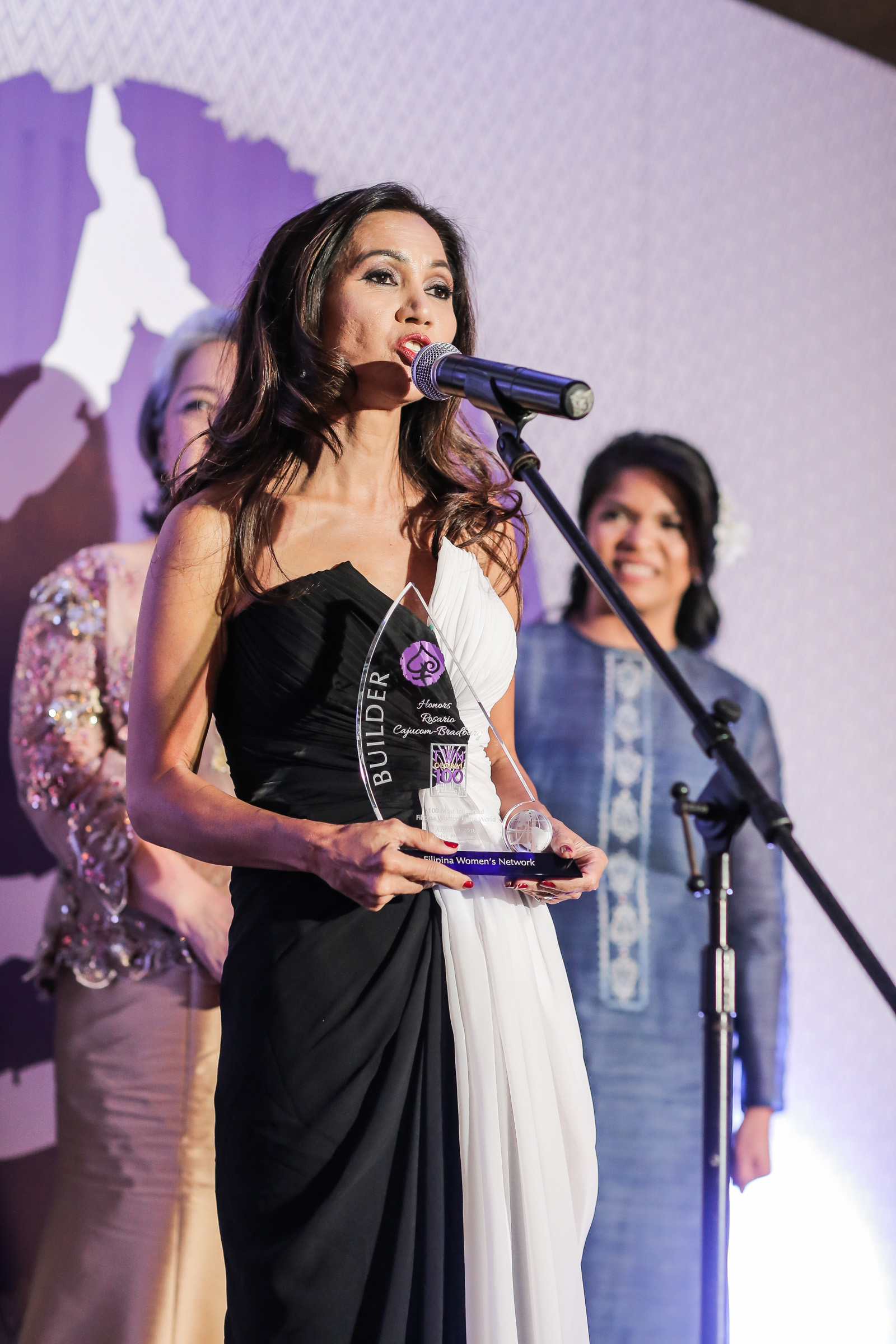
Rosario Cajucom-Bradbury (Global FWN100™ '16) received the Global FWN100™ award in the Builder category in recognition of of her exceptional business impact, deep passion, collaborative initiatives in her capacities as Adviser to The Wallace Business Forum (WBF), the Former Managing Director & CEO, SGS Philippines & SGS Gulf Ltd. ROHQ and Former Chairwoman of Philippine Swiss Business Council.

Lorna Patajo-Kapunan: The Secrets of Successful Women
Lorna Patajo-Kapunan (Global FWN100™ '16) delivered her leadership keynote at the Global FWN100™ 2016 Gala Dinner and Awards Ceremony during the #FWNSummit2016 in Cebu, Philippines on Tuesday, August 23, 2016. Lorna was awarded the Builder award in recognition of her deep passion for causes through collaborative initiatives or alliances with corporations or nonprofit organizations on behalf of her firm, Kapunan, Garcia & Castillo Law Offices.
"If there's one hallmark for successful women, it's that they're exceptionally hard workers and some are slave to their jobs. But hard work has many faces and like success itself, means different things to different people. I believe that the critical factor is not the number of hours women work as much as the intensity of focus. Working hard has a negative connotation. What is important is loving what you do." - Lorna Patajo-Kapunan (Global FWN100™ '16)
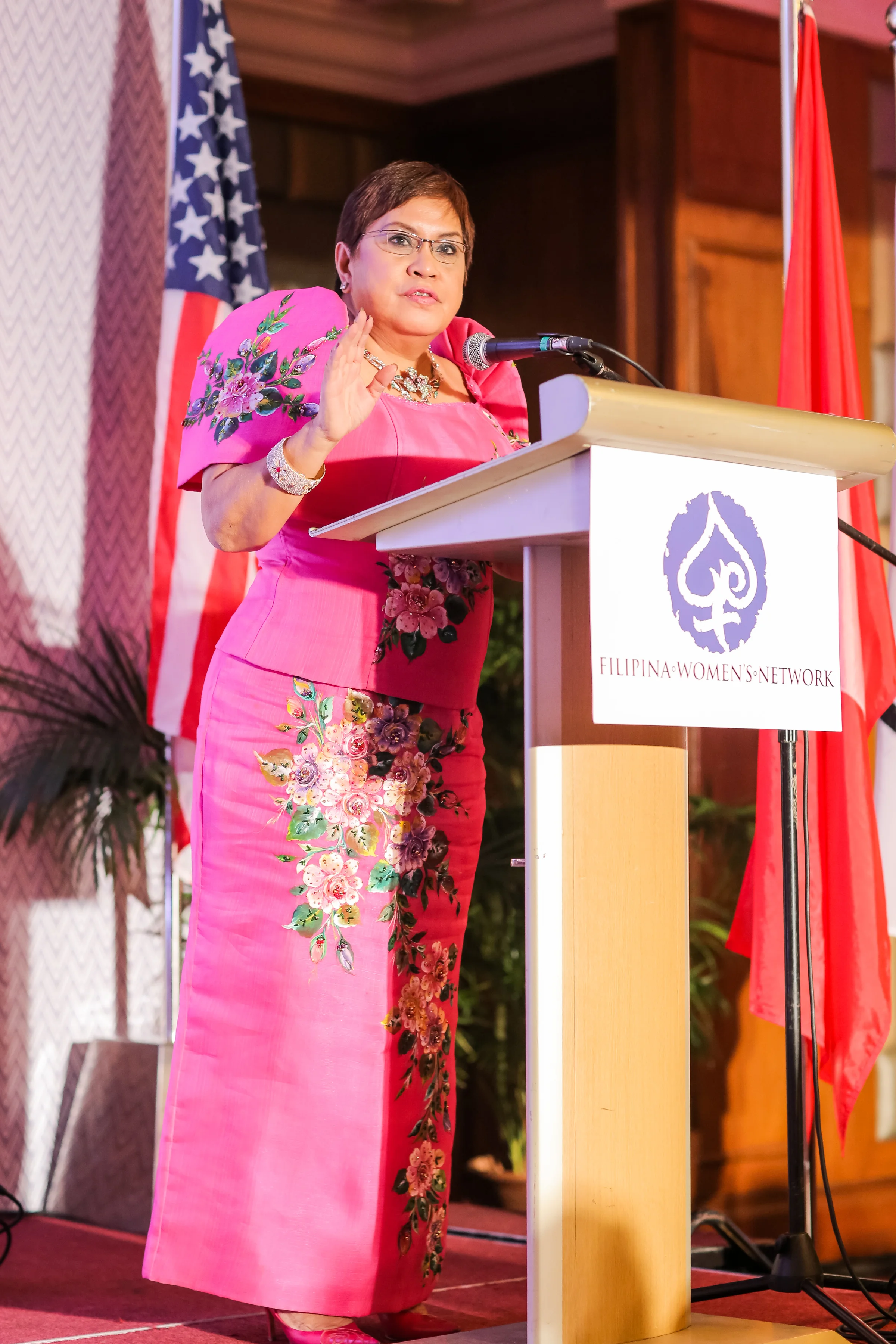
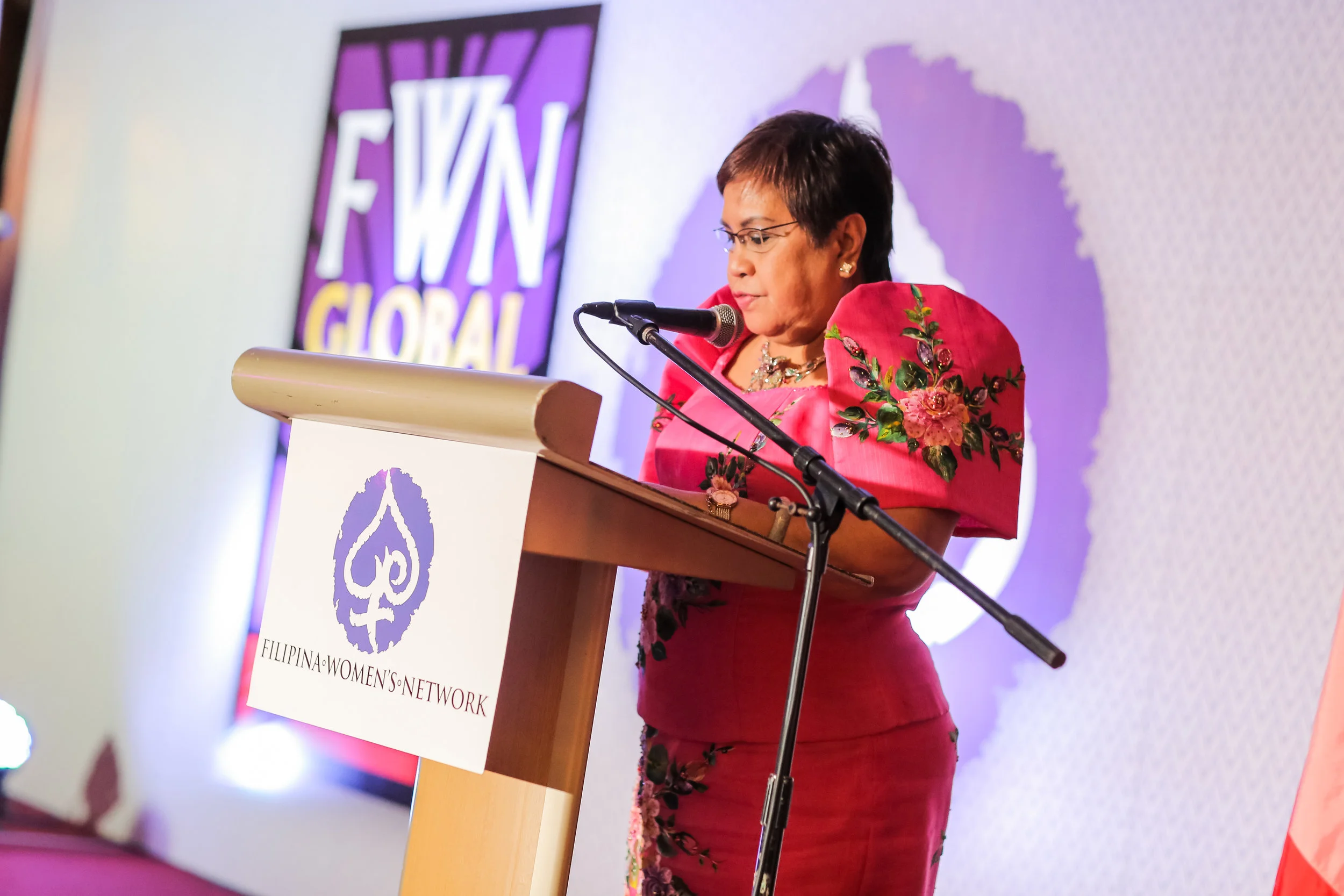
Lorna Patajo-Kapunan (Global FWN100™ '16), Senior Partner, Kapunan Garcia & Castillo Law Offices delivered her leadership keynote "The Secrets of Successful Women" during the Global FWN100™ 2016 Dinner and Awards Ceremony on August 23, 2016 at Shangri-La Mactan in Cebu, Philippines
Lorna Patajo-Kapunan (Global FWN100™ '16) delivered her leadership keynote at the Global FWN100™ 2016 Gala Dinner and Awards Ceremony during the #FWNSummit2016 in Cebu, Philippines on Tuesday, August 23, 2016. Below is the full text of her keynote speech.
It’s a fact. We’ve entered the era of the successful woman the high flyers & high earners. Yet the remarkable progress of these successful women has been surprisingly low profile. Why? In large part because until recently they didn’t exist. “It is only in the last two decades that women have had [substantial] personal earnings from their own activities,” their own talent competence and resources. The woman CFO/COO—is no longer Child of Owner (or wife).
But successful women are still a minority. Fewer than 20 percent of six-figure earners are female. Most women remain sorely underpaid. In virtually every field, women make 50 to 80 percent of what men make.
Do successful women have to work absurdly long hours, forfeit their femininity, forgo their happiness, give up all semblance of a personal life? Do their marriages hold up? Do their children suffer? Do they bear lasting scars from breaking glass ceilings or battling gender bias? Is it possible for women to become high earners?
Some of us believe the myth that managing money is clearly a man's job. This was what was pounded on us when we were young. The man is the breadwinner. The women takes care of house and children. Ang babae ay pang Kusina or pang Kama lang. Some of you don’t even cook—or have sex.
For far too many women, their financial limits have become a fact of life. The thought of making more is like climbing Mount Everest, a colossal, if not impossible, task. They may have the desire, but they lack the hope or belief in themselves to meet the challenge.
Numerous psychologists have told me that the amount people earn indicates how they feel about themselves, like a mirror reflecting back their level of self-worth. But in my dealings with successful women, I wasn't clear which came first. Did people make more because they felt good about themselves, or did they feel good about themselves because they were paid more?
If there's one hallmark for successful women, it's that they're exceptionally hard workers and some are slave to their jobs. But hard work has many faces and like success itself, means different things to different people. I believe that the critical factor is not the number of hours women work as much as the intensity of focus. Working hard has a negative connotation. What is important is loving what you do. In some cases, women do not know where their work stopped and their personal life began.
These are superwomen probably most of you here, who are on steroids who have no clue on how many hours they worked; they just know how few hours they slept. These women will break down. They may have once loved their job but their passion had turned to obsession, their work had become an addiction, their long hours felt more like hard labor, and their generous salaries were but golden shackles.
But money isn't the only reason successful women have lopsided lives. Overwork has become an occupational hazard for ambitious women trying to make it in a man's world. It is often said that "women have to make disproportionate sacrifice to compete equally in the work world." Women have to work twice as hard as the men just to keep up. It's an easy, perhaps inevitable, trap to fall into, but the successful women get out of this trap before it's too late.
Working Hard Doesn't Mean Working All the Time
"Overwork is a self-inflicted punishment. I don't do that anymore." This theme of working less and making more is especially true among the entrepreneurs. Not so much in their early years of doing business, but eventually many of them came to the same conclusion.
It was the intensity of focus on their work, not the number of hours they spent doing it that factored so heavily into these women's financial success.
WHAT DRIVES SUCCESSFUL WOMEN
Money is not the motivator- it is what money represents. Successful women are driven more by what they hope to achieve than what they aspire to earn. Each woman has her own definition of what the money symbolizes and what achievement means.
Focus on Fulfilling Your Values Rather Than Financial Gain.
Successful women have a vision for their lives based on cherished values like recognition, security, challenge, or independence. This intangible goals, more than hard cash, provide the fuel for their financial success. Money became the by-product of their value-based ambition and, simultaneously, gave them more opportunities to live out their authentic values.
If making money is the goal, you’ll never make enough to be happy. You’ll always want more. A lot of people fall into this trap and never find happiness because they’re always chasing money.”
LOVE RULES!
What’s important, is to follow your heart.
Successful women love what they do for a living. This passion for work plays a much more significant role in women’s success than any impressive credential or high-flying career.
Loving what You Do Is Much More Important Than What You Do.
“If you’re not passionate, you shouldn’t be doing it.” “I think passion is more important than what field you’re in, more important than hard work.”
I believe, no matter how impossible it seems, once you decide to do what you love and be excellent at it, the money will come.
DO WHAT YOU FEAR
“You have to believe in yourself, that you can do anything you set your mind to.” That catchphrase---I can do anything---emerged as a recurring mantra for successful women.
Belief in yourself doesn’t mean the absence of self-doubt.
Every woman admits to grappling with feelings of inadequacy, incompetence, and fear. Fear of failure, fear of rejections, fear of criticism lay like fault line just below the surface. But successful women look and act confident even when they don’t feel it. “It’s like being a duck. Calm and unruffled on the surface, but paddling like hell underneath.”
“There are times I’ve sat in our board of directors meeting looking as if I’m reading a complicated report and I don’t know what the hell I’m looking at . But I put on a good show. I’m somehow able to pull it off.”
A woman CEO told me-- “I know, I worry people will see I’m not that smart. A therapist told me it’s called the Imposter Syndrome. “I’m so afraid people will discover how dumb I am. I wrestle with this all the time.”
Some reference to the Imposter Syndrome ran through so many of these women’s stories. Beneath their confident exteriors lurked layers of insecurity. Yet despite their qualms, these women, managed to become incredibly successful, professionally and financially. How did they do it?
Feel the Fear, Have the Doubts. Go for It Anyway.
Feeling like a fish out of water was a common theme among aspiring women I have met who made dramatic career changes into more lucrative (often male-dominated) fields. But the biggest challenge for nearly everyone was simply trying to stay afloat in a sea of endless obligation.
THE BALANCE BEAM
The whole notion of trying to achieve success on the job and enjoy a life outside of it is an ongoing struggle for practically every working woman.
It’s no surprise that balancing work and personal life is the most mentioned, most taxing quandary successful women encounter, particularly as they try to merge their desire for marriage and family with their aspirations for financial success. It is something men rarely have to deal with. “I’ve yet to hear a man ask for advice on how to combine marriage and a career,” women’s advocate Gloria Steinem once observed. But we hear it incessantly from women.
The struggle for balance is even more apparent in the life of the single mom.
Few people know that I am a single Mom. I lost my husband to Colon Cancer in 2001, I thought this was the end of the world—until in 2003, I lost the youngest of my sons (he was 8 years old then). That really was the end of the world for me, and I cursed my God “nag quota na ako Lord why me.” But I had to bounce back-- had 4 sons to take care of, my own law firm, a reputation of being a fighter. So I fought hard to keep body & soul together. The rest is History--- and God has been good to me!
“For a single working mom it’s always terrible balancing act. You’re never at work enough and never with the kids enough. You’ve got to make hard choices about your time. Sometimes you have to skip being home because you have to be at a business event. And then you’ll feel terrible that you’re not with your kids. It’s constant choices, and you never know if you’re making the right ones.”
Even with a husband at your side, mothering while working is still a herculean task.
The work/family dilemma is an intricate web of complex issues—issues of identity, autonomy, and a maternal instinct that exerts a fiercer pull than the force of gravity.
Successful women finally settled on a workable equilibrium. That seems to be what happens. Over time majority of high-earning women established their own brand of precarious balance. They each found, usually through trial and error, viable solutions for preserving their mental health while managing their multiple roles. Those solutions came from taking a hard look at their personal priorities, what they cherished most in life, and then discerning between what they thought they should do and how they really wanted to live their lives.
Think in Terms of Trade-offs, Not Sacrifices, to Find a Workable Equilibrium.
This battle for balance, to get overinvested in work but still do what it takes to advance, is ongoing for virtually every successful high earner.
NO ONE PROMISED US A ROSE GARDEN
There’s another battle that may be even more painful than juggling too many hats: contending with gender bias and sexual harassment. Not all successful women have to confront these problems. For those who do, however, it can be the most frustrating and distressing challenge of all.
Discrimination has always been a workplace threat from aspiring women, and these days, the higher a women climbs, the more acute this problem seems to become.
Corporate women complain of being excluded from social occasions, passed over for promotions, or ignored for tough assignments. Entrepreneurs resent not receiving the same referrals, networking opportunities, or start-up capital as their male colleages.
“I wish we were all treated equally, but it just isn’t the case,” an investment banker, told me. “The guys will get asked by the people that run the firm to go golfing, but they won’t ask me because I’m a woman. So my peers are hanging out with the decision makers on weekends and I am not invited.”
The solution—recognition, not resignation--- is how most successful women deal with gender bias and other injustices.
The point is to accept the fact of it, get angry enough to do something about it, but not blame or become a victim.
Many successful women also find strength in a sense of humor.
“My sense of humor is shock absorber”
These successful women figured out a key secret for dealing with prejudicial treatment without losing their temper, their footing, or their perspective:
Sometimes You Just Have To Shrug It Off and Have a Good Laugh.
THE HAPPINESS FACTOR
One thing is for sure: There’s plenty of stress in the success lanes. Coping with multiple roles, a challenging workload, and their minority status is no piece of cake for Successful Women. Yet despite the ubiquitous pressures, I found another frequentlyrepeated, and very surprising, theme. As a whole, successful women are a very happy bunch. Successful women learn from other successful women/mentors. None of us are successful on our own.
Successful women always count their blessings.
Appreciate Abundance.
We might want to rethink that old saying that money can’t buy happiness. [“But a] better predictor of happiness is a person’s satisfaction with his or her income. According to studies, the most highly compensated women receive less than 3 percent of what the best compensated men make. But instead of focusing on the disparity, or becoming disheartened by its implications, the women I spoke to recognized and appreciated that they were making more than most certainly more than most women, andin many cases, more than they had even dreamed they would. While everybody’s been fixated on doors that were closing, feeling cynical and resigned about what struggles might lay ahead, high earners were consistently finding, and opening windows of opportunity.
But financial success is not what successful women should be all about. We are blessed because we are meant to share our blessings with others.
I am known as a celebrity lawyer. A fighter with balls (I often want to retort—“why do you have a vagina?—but I do have cases not written about by media-- the 18 month old daughter raped by the father on drugs, the 13 year old student gang raped by policemen, the battered wife with 8 children refused support by the husband, the victims of domestic violence, oil spill case in Barangay Bangkal 87 families and a whole Barangay lost their homes, cases for World Wildlife Fund (WWF), Red Cross, Ballet Philippines, PETA (People for the Ethical Treatment of Animals), PAL Flight Attendants on their gender discrimination issues and many other pro bono cases. These are the cases that made me who I am today. My Mantra-- those who have less in life should have more in law. I come from a family of lawyers-- my father Justice Line M. Patajo was former Justice of the Supreme Court, my first cousin in law Justice Santiago Kapunan was also Justice of the Supreme Court, my husband was RTC Judge, my uncle was Executive Judge of Antipolo, my uncle-in-law was the prosecutor in Nalundasan case that sent Marcos to Jail—my 2 sons are now lawyers.
I stand by the belief that the law is a noble profession—regardless of the horror stories we hear on hoodlumsin robes. And so, let be leave you with this thought--- that we are successful because were are meant to be successful to help others help themselves.
Womenare great story tellers. Let me end with this story.
“UBUNTU” – A very nice story from Africa…
The motivation behind the Ubuntu Culture in Africa— An anthropologist proposed a game to the African tribal children. He placed a basket of sweets near a tree and made the children stand 100 meters away. Then he announced that whoever reaches the tree first would get all the sweets in the basket. When he said “ready steady go!”
Do you know what these Children did?
They all held each other’s hand, ran together towards the tree divided the sweets equally among themselves, ate the sweets and enjoyed it. When the anthropologist asked them why they did so—They answered UBUNTU which meant “How can one be happy when the others are sad? UBUNTU in their language means “I AM BECAUSE WE ARE”
A strong message for all generations—Let us always have this attitude and SPREAD HAPPINESS WHEREVER WE GO.
Mabuhay! I am—BECAUSE WE ARE!
RE-AFFIRMATION/REMINDERS:
Remember that you are still a woman.
Success does not mean you have to think, look, feel like a man.
While you strive, you still must be receptive.
While you are strong, you are allowed to cry.
While you wear power suits, you can still wear high heels and be flirty.
While you are in control, you can still be gracious.
Let us celebrate our “Womanity!”
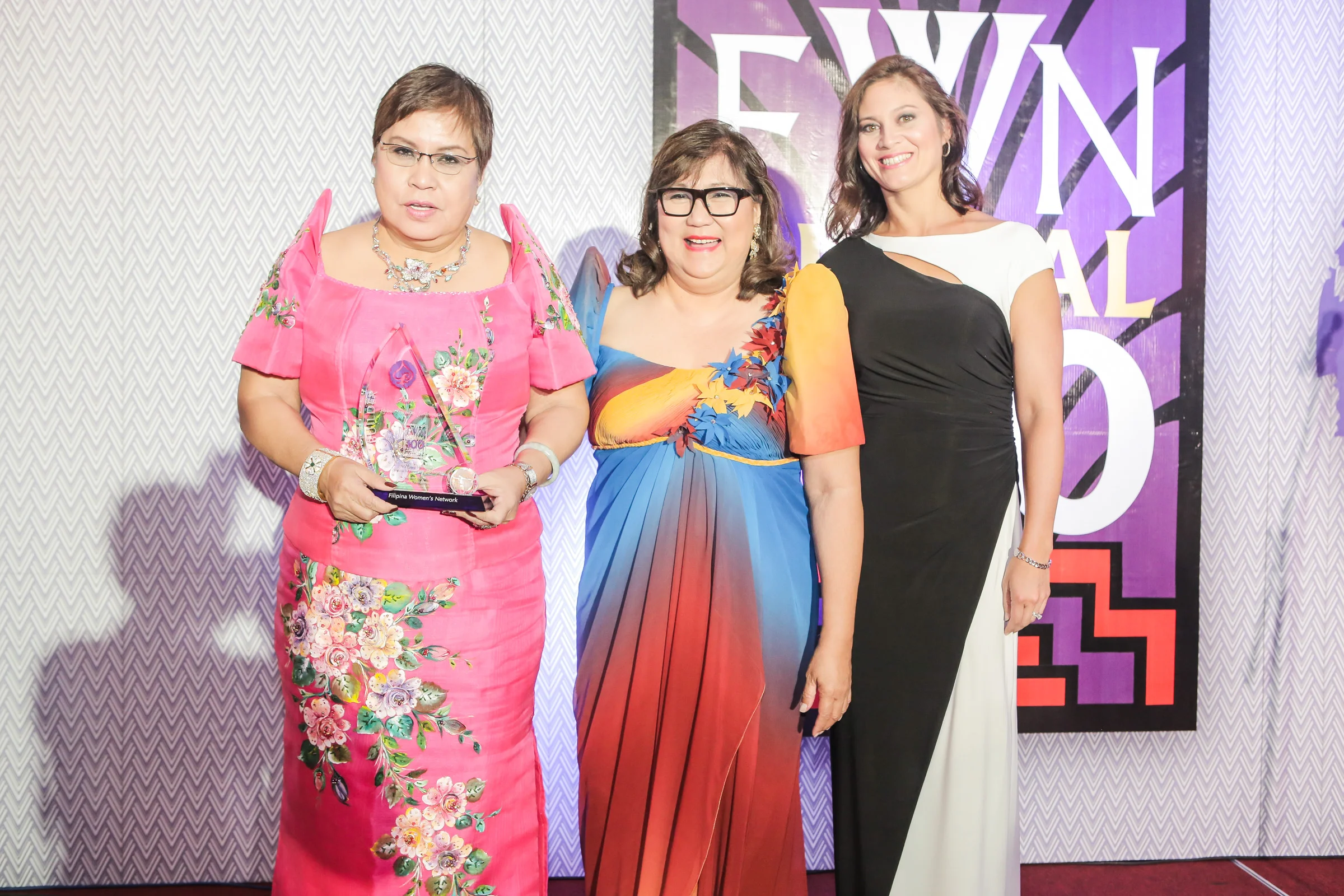
Lorna Patajo-Kapunan (Global FWN100™ '16) pictured with FWN CEO & Founder Marily Mondejar and FWN President Susie Quesada.
About Lorna Patajo-Kapunan
Atty. Lorna Patajo-Kapunan is an advocate for Women’s and Children’s Rights as well as the Environment and Animal rights. She has the distinction of being the first to have obtained a Writ of Kalikasan from the Supreme Court for her West Tower/Barangay Bangkal Oil Spill Case.
Atty. Kapunan also vigorously fought for the preservation of the Arroceros Forest Park when the local government officials of Manila ordered the construction of the City Schools Division Office within the forest premises which prompted the killing of 187-fully grown trees. She also joined the clarion call to free the old and ailing elephant Mali from its pen in the Manila Zoo, among others.
On the economic front, Atty. Kapunan is the Legal Counsel of Kilusang Makabansang Ekonomiya (KME) which advocates economic nationalism and champions the fight against poverty and corruption in all branches of the Government.
Atty. Kapunan also is an advocate for the protection of equity/royalty rights of artists, performers, broadcasters – which has gained her the reputation of being a “lawyer for the celebrities.”

Senator Loren Legarda: Intersection of Climate Change and Modern-Day Slavery
Former Governor of Antique Sally Zaldivar Perez delivered a leadership keynote on climate change on behalf of Senator Loren Legarda at the #FWNSummit2016 in Cebu on August 24, 2016.
"The first step in addressing this vulnerability is to change the way we view women in the context of disaster realities. Women are not victims. They constitute a formidable “first line of defense” against climate and disaster risks."
Former Governor of Antique Sally Zaldivar Perez representing Senator Loren Legarda at the #FWNSummit2016 in Cebu on August 24, 2016.
Former Governor of Antique Sally Zaldivar Perez delivered a leadership keynote on climate change on behalf of Senator Loren Legarda at the #FWNSummit2016 in Cebu on August 24, 2016. Below is the full text of her keynote speech.
Our nation has been gaining significant improvement in promoting gender equality. The Philippines has consistently been first South and Southeast Asia and among the top 10 in the world in successfully closing the gender gap since 2006, when the World Economic Forum released its first Global Gender Gap Report.
But even with this seeming success in our fight for gender equality, we need to do more. We must build these gains and continue to improve on our policies to address the challenges that women are facing in this era of globalization.
I have been asked to speak about the intersection of climate change and modern-day slavery. Allow me first to discuss how climate change and how it impacts women and girls.
Here in our country, disaster risks abound. The Philippines, being an archipelagic state located in the western edge of the Pacific Ocean and directly within the Ring of Fire, faces the constant risk of typhoons, drought, as well as earthquakes and volcanic eruptions.
Now with climate change, we confront weather in extremes such as Ondoy and Pepeng, Sendong, Pablo, Yolanda, the monsoon rains, and the stronger episodes of El Niño we’ve experienced in the past months.
The Asia-Pacific region accounted for 41 percent of the world’s natural hazards over the past 10 years. These disasters have been unforgiving, claiming an average of 70,000 lives each year from 2004-2013[1]. Another 200 million are affected each year, half of them women and girls.[2]
Although disasters do not discriminate between the young and old, the rich and poor, they impact individuals and families disproportionately – with the strong and capable surviving and coping better, while the weak and vulnerable losing lives and suffering more. And in settings where gender inequality pervades, the situation becomes even worse for women.
In 2013, the world witnessed the massive destruction that Typhoon Haiyan/Yolanda, considered the world’s strongest typhoon to hit land, wrought in Central Philippines – how the City of Tacloban, the economic center of Eastern Visayas was brutally washed away by its storm surge that left more than 6,000 people dead and countless missing in its aftermath.
Haiyan has revealed how vulnerable women are to disasters.
More than 3.5 million women and girls were affected, 250,000 of them pregnant and 169,000 breastfeeding[3]. Women’s distinct nutritional needs make coping with disasters even tougher.
Haiyan also caused the loss of income sources for almost six million workers, 40% of whom are female workers[4]
Moreover, women’s displacement from their homes put them at greater risk of sexual violence and of falling prey to human traffickers.
The United Nations Environment Programme (UNEP) has raised concerns that climate-related disasters leave women and girls more vulnerable to trafficking because in the aftermath of disasters, local security safety nets may be disrupted and economic challenges also make women potential targets for human trafficking[5].
These realities show that even in disaster impacts, there is no equality.
As women have a greater stake in disaster realities, it is time we take action by putting women at the forefront of disaster risk reduction efforts.
Women’s vulnerability in times of disasters is not a showcase of weakness, but rather highlights the inequality that exists- women have lesser access to resources and information; gendered social roles and cultural constraints on their actions continue to persist in many societies[6]; lower level of education among women, especially in rural areas, prevent them from understanding disaster warnings, thus preventing them from taking precautionary measures.
The first step in addressing this vulnerability is to change the way we view women in the context of disaster realities. Women are not victims. They constitute a formidable “first line of defense” against climate and disaster risks.
We already have a number of inspiring stories wherein women are at the forefront of climate action and disaster resilience efforts.
In the municipality of San Francisco in Camotes Island, Cebu, 90% of officers in charge of environmental protection and disaster prevention programs in each and every purok are women, since most of the male residents are focused on making a living for their families.
The municipality is a 2011 UN Sasakawa Awardee for Disaster Reduction because of their Purok System, which focuses on addressing the vulnerability of every village in the municipality by mobilizing local resources in creating local and practical solutions based on the unique needs of every community.
In the Province of Rizal, the Sapinit Watershed Settlers Association, composed of women residents of the area, established a nursery filled with narra and mahogany seedlings, in coordination with the Philippine Disaster Recovery Foundation. The women members tilled the land, prepared the watershed, and planted the seedlings. This effort is aimed at helping to restore the devastated Marikina watershed[7]
In the coastal Barangay of Talokgangan in the Province of Iloilo, women are at the forefront of rehabilitation efforts covering 3.5 hectares of mangrove forests. What initially started as a male-dominated organization in 1996, the Talokgangan Concerned Citizen Association has become, by 2010, a mostly-female organization with the mission of restoring, preserving and creating opportunities to save Banate-Barotac Bay from further deterioration. The association was organized through the assistance of the Banate-Barotac Bay Resource Management Council Inc. (BBBRMCI), an inter-local government unit (LGU) alliance among municipalities of Barotac Nuevo, Anilao, Banate, and Barotac Viejo, in the Province of Iloilo.
The Fellowship for Organizing Endeavors, Inc. (FORGE) initiated disaster risk reduction projects in Cebu City. These include a riprapping project in Brgy. Kalunasan, tree planting initiative in Bulacao, and household based solid waste management in Brgy. Apas. In all of these projects, women were not contented with just being mere supporters. They were also involved in the project management committee for the riprap construction. The women outnumbered men in the tree planting activities and women were more zealous in the planning workshops on waste management.
All of these stories convey the message: Women are no longer willing to stay on the sidelines. Stereotyped gender roles have no place in the critical fight against disaster risk and climate change.
We already have a number of laws adopted with the Filipino woman at the top of mind. These include the Disaster Risk Reduction and Management Act and the Climate Change Act which provide for gender-responsive and proactive response in lessening the impacts of disasters and climate change; the Domestic Workers Act which effectively brings domestic workers, the vast majority of whom are women, within the full and formal protection of our laws and government; the Expanded Anti-trafficking in Persons Act which ensures greater protection for women and children.
We must acknowledge the capacity of women to get involved, decide, take action and lead. Our goal should be not only to reduce women’s vulnerability but also to empower and allow them to become part of climate action, thereby addressing the risks they face.
To harness the strength of women in reducing social vulnerability and increasing local capacity is to ensure the sustainability, inclusivity and resilience of local and national development pursuits.
Together, let us prove to the world that women are agents of solutions and resilience, indispensable holders of valuable knowledge and skills, and able leaders of change from the grassroots level to the global stage.

Former Governor of Antique Sally Zaldivar Perez (center, in red) photographed with (L-R): Bing Carrion (Global FWN100™ '16), FWN Board Members Nini Alvero (Global FWN100™ '16), Maria Beebe, FWN Founder & CEO Marily Mondejar, FWN President Susie Quesada, FWN Board Member Thelma Boac, Jopin Romero (Global FWN100™ '16), Rosario Cajucom-Bradbury (Global FWN100™ '16), Evelia Religioso (Global FWN100™ '13)
About Senator Loren Legarda
For the past three decades, Senator Loren Legarda has dedicated her work to serve the Filipino people, primarily by promoting the sustainable and equitable use of our natural resources; advancing programs on building community resilience; advocating for social justice, human rights, peace and cultural diversity; and initiating measures for quality and accessible education, decent employment and livelihood opportunities. A three-term Senator, Legarda is the only female who topped the Senate race twice, with more than 15 million and 18.4 million votes in 1998 and 2007, respectively. She is the only woman to become Senate majority leader.
About Sally Zaldivar Perez
Sally Zaldivar Perez is the former Governor of the province of Antique and former Vice President for Visayas of the League of Provinces of the Philippines. Governor Sally, to friends, took up Bachelor of Science in Foreign Affairs in 1957 and Bachelor of Science in Political Science in 1958, both from the University of the Philippines (U.P.). Prior to being elected governor she was Undersecretary of the Presidency for Liaison with the Senate and Public Affairs Assistant to the Office of Senator Edgardo Angara. She was also the former chairperson of Antique Development Foundation and founding trustee of the Evelio B. Javier Foundation.
[1] U.N. News Center. Asia Pacific Report: World’s most disaster prone region experiences three-fold rise in deaths. December 2014.
[2] Wahlstrom, M. Project Syndicate: Women, Girls and Disasters
[3] UNFPA
[4] Ibid.
[5] UNEP: Women at the Frontline of Climate Change- Gender Risks and Hopes.
[6] UNFPA: UNFPA champions recommendations for gender-responsive disaster risk reduction
[7] National Council on Disability Affairs.
Angelica Berrie: When You Touch Your Soul, You Become Fearless
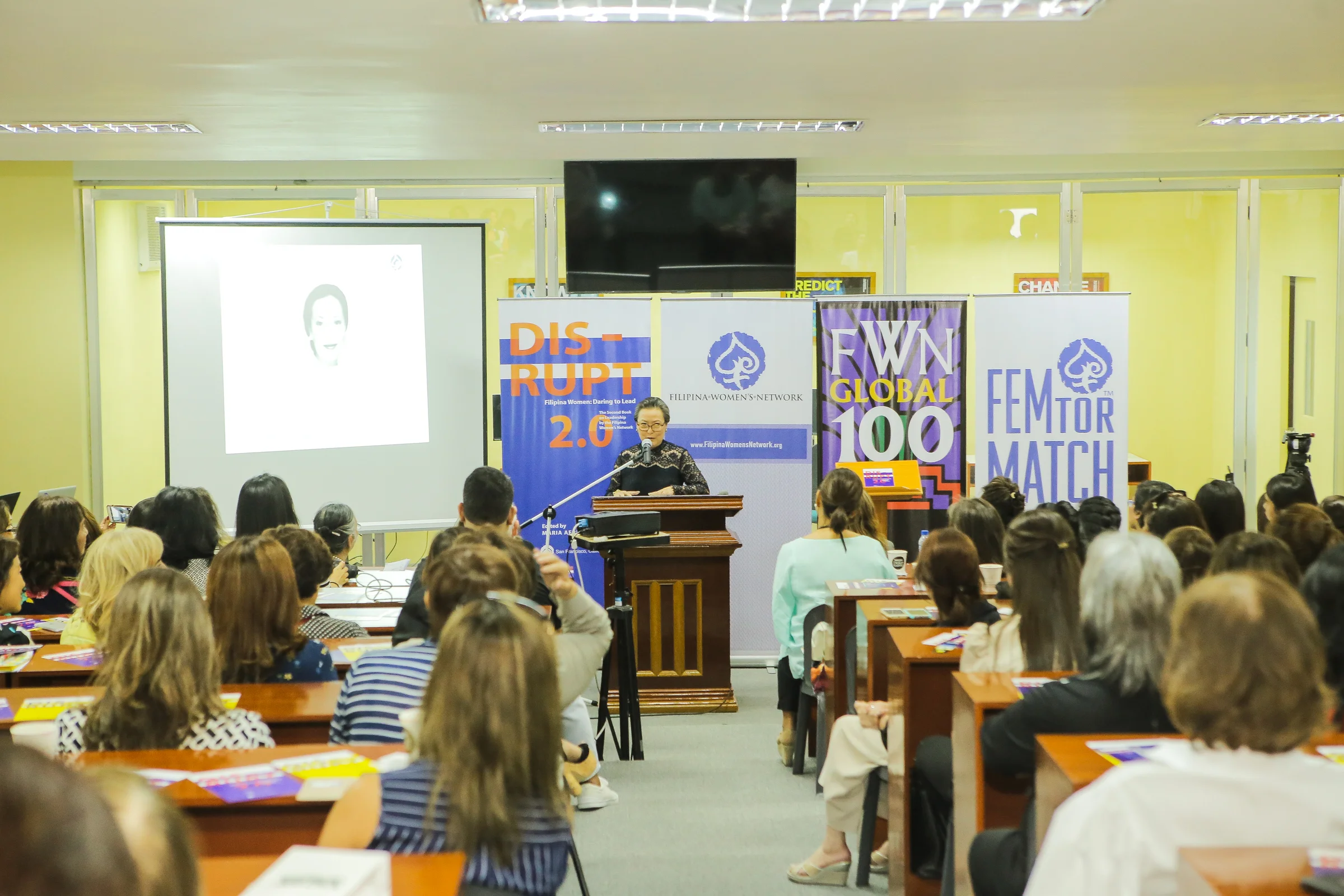
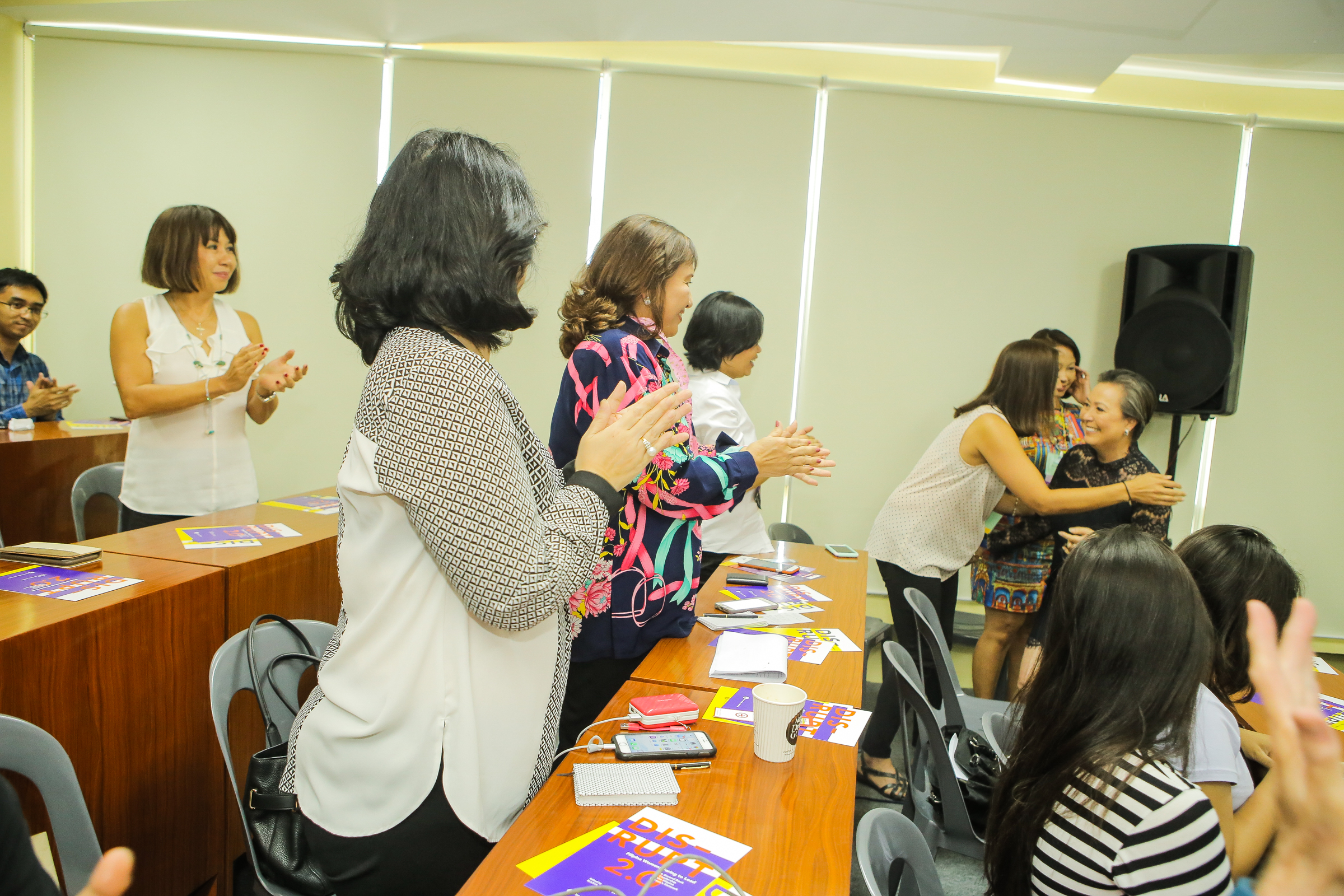
Angelica Berrie (Global FWN100™ '14) delivered her leadership keynote at the launch of FWN's second book on Filipina women leadership, DISRUPT 2.0: Filipina Women: Daring to Lead at the University of Cebu in Banilad during the #FWNSummit2016 on Monday, August 22, 2016.
"One of the biggest handicaps women face is not the glass ceiling imposed on us by others but the ceiling of self-limiting fears that hold us back from achieving our fullest potential. To be a woman who leads and who wants to be a leader today in a world filled with complexities requires fearlessness. Fearlessness is a state of mind to be cultivated by enlightened leaders so they can bridge differences within communities and around the world." - Angelica Berrie, 13th Filipina Leadership Global Summit Keynote, August 22, 2016

Angelica Berrie (Global FWN100™ '14) delivered her leadership keynote at the launch of FWN's second book on Filipina women leadership, DISRUPT 2.0: Filipina Women: Daring to Lead at the University of Cebu in Banilad during the #FWNSummit2016 on Monday, August 22, 2016. Below is a the full transcript of keynote speech:
My name is Angelica Urra Berrie and my story begins right here in Cebu, where I was born. My mother was born in Amoy, now the Fujian Province of China and my father’s father came to the Philippines from a small town called Estella, in the province of Navarre in Spain.
Studying in an all-girl convent schools here in Cebu, Bicol, Bacolod and Manila, I had no clue what philanthropy was until I met my husband, Russ Berrie, a New Jersey sales entrepreneur who made his fortune selling teddy bears and trolls.
Moving from the Philippines to New Jersey was a culture shock as I went from passing the collection basket at Sunday mass to having our names on buildings and pledging huge amounts publicly at fundraisers.
The most valuable lesson I learned was that making a difference did not mean writing a million dollar check but giving the gift of who you are, your passion, experience, creativity, energy and connections.
It is a message I love to share as it has enriched my life and given me a sense of purpose and fulfillment.
As President of the Russell Berrie Foundation, I have the pleasure and privilege of giving away my husband’s money.
Russ was a salesman who wanted his gravestone to say: “He was a good salesman.”
So he established the first and so far, the only professional sales degree program in William Paterson University in NJ. He was a Type 2 Diabetic, so we named the Naomi Berrie Diabetes Center at Columbia University in NY after his mom, who was also a diabetic. It was created around a vision for humanistic career, with research and all related specialists handling the different aspects of diabetes under one roof so patients don’t have to run around different buildings.
Our foundation believes in making a difference. One of the ways we think of our impact and legacy is in developing leadership because leadership is the gift we leave behind. At the end of the day, when our foundation sunsets, we want to know that there is a next generation of leaders who will ensure the continuity of our values.
In our Jewish community of northern New Jersey, we have over 60 Berrie Fellows who now Chair most of the boards of our Jewish organizations, synagogues and nonprofits.
In Rome, we created the Pope John Paul II Fellows for Inter-Religious Studies at a Vatican university that has produced Popes and Cardinals. We now have about 70 Inter-Religious Fellows from 21 different countries, including the Philippines, many of whom are already in leadership positions throughout the Catholic world. If just one of them becomes a Pope sometime in the future, it will be like hitting the jackpot.
In Sales, graduates of the Russ Berrie Institute of Professional Sales are being recruited before they even graduate as they undergo sales simulation training in a special audiovisual lab.
In Israel, the foundation has identified civic leaders within government offices and trains Mayors (including Arab mayors) of municipalities to collaborate to increase their collective impact. One of the program’s trains Arab women to empower them to run for office at all levels of government. They started with 15 women who produced two winners and now have 200 applicants whom we hope will produce 15 political leaders.
One of the biggest handicaps women face is not the glass ceiling imposed on us by others but the ceiling of self-limiting fears that hold us back from achieving our fullest potential.
To be a woman who leads and who wants to be a leader today in a world filled with complexities requires fearlessness. Fearlessness is a state of mind to be cultivated by enlightened leaders so they can bridge differences within communities and around the world.
I had the pleasure of speaking at the Filipina Summit two years ago about the power of women to make a difference. When we all went onstage to share a few lines of wisdom, I chose the words of the Persian poet, Rumi:
Forget safety.
Live where you fear.
Destroy your reputation.
Be notorious.
In a world where women constantly have to make fearless choices, Rumi’s words speak to women who lead. Angela Merkel in Germany made a fearless choice by taking in refugees. An 11-year-old Pakistani girl named Malala was shot in the head for daring to pursue an education. In the U.S., a woman is seeking the highest position in government for the first time. It is OUR time to lead fearlessly – so we should unpack this word to unleash its power in our own journey!
Fear holds us back from leading our best life. Erica Jong, in her book, Fear of Flying, said, “I have accepted fear as a part of life… specifically the fear of change… I have gone ahead despite the pounding in the heart that says, “turn back.”
I first encountered fear during the last days of the Marcos era.
I happened to be with a group who found ourselves standing in front of the first tank that rolled into EDSA. Each year, during the anniversary of the People Power Revolution, TV stations air a rerun of those fateful moments when those nuns started praying. There was a numb sense of fear that gripped the crowd, knowing tear gas was released on the other side of EDSA and we were staring up from a very vulnerable position below a tank at a hardened marine with a belt of very large bullets strung across his chest. There I was, with a yellow headband, clutching a rosary and holding up a Bible. What you don’t see in that footage are tears of fear flowing down the faces of many of us in that crowd. We were all frightened! We didn’t have time to think,we just held hands and prayed.
It was that first moment when people refused to turn back that shifted the tipping point. This collective passage from fear into fearlessness changed history by overturning 14 years of absolute power.
There are other moments when we don’t have a choice. A bolt of lightning strikes and shakes up our ordered lives – a life-threatening disease, an accident, a change of fortunes, a painful loss- a radical disruption. One morning, you wake up and realize that nothing in your life is ever going to be the same again.
Fourteen years ago, my husband Russ died of a stroke at the age of 69. Within 24 hours, I became CEO and Vice-Chair of a public company on the New York Stock Exchange, and President of the Russell Berrie Foundation. It was a growth experience that set me off on a transformational journey that I never wanted to be on.
At my first board meeting, I went to the bathroom during the lunch break and cried, washed my face and marched back out. When the Board asked me to move into Russ’ office, I cried. I didn’t want that big desk in the corner office! My first trip alone to negotiate with our vendors in China, I cried. The first time I had to fly to Israel without him, I cried. I wasn’t really fearless! I simply had no choice but to surrender and go wherever the universe was taking me. Life doesn’t prepare us for these moments. When it happens, there is no time to be afraid to say, “stop the train, I want to get off!”
After Russ died, someone sent me a card that said, “Life begins where your comfort zone ends.” I learned that fearlessness is not about being brave-hearted but about letting go—letting go of fear, getting out of your comfort zone, daring to be yourself in a world that is trying its best to make you just like everyone else. Fearlessness is the art of surrender, not giving up but opening yourself to faith, faith in yourself and faith in a higher power.
We are only as small as our fears. Fear holds us back from achieving greatness. Women tend to make ourselves small, to quiet our voices, to continue perpetuating the myth that we are better seen and not heard, to keep ourselves small by not making waves or sticking out.
Right sizing our smaller self is an exercise in fearlessness: asking if, where I am now is really where I want to be? If my friends today are who I want to surround myself with at this stage of my growth? If my relationships nurture me? If What I do is aligned with my passion, whether I am making a difference by leading a purpose-filled life? Who has time to sit and ponder these scary thoughts? Yet the very act of going into our fear allows fearlessness and authenticity to emerge.
Anne Sexton tells us to “put your ear down close to your soul and listen hard”… to know who you are. When we are so busy we fail to hear our inner voice, our lives become a “constant evasion of ourselves.”
Fearlessness comes through authenticity, being true to ourselves and living our values. Fear of change limits us, makes us vulnerable so we are quick to compromise, to settle for less, because giving up what we know is more difficult than pursuing our dreams. Going to places that scare us could awaken possibilities of an alternative life as holding onto fear keeps us in sad marriages, destructive relationships, unfulfilling jobs. When we are courageous enough to own our truth, speak it directly, and express it everyday in our life, we transcend fear by connecting to our deepest and most authentic self. When we are in touch with our soul, we become brave enough to venture into the unknown.
What are YOU afraid of? Shortly after I was widowed, I attended a dinner where our host asked his guests this question. As we went around the table, people said things like, “I’m afraid my son is gay,” “I’m afraid my children won’t respect me,” “I’m afraid my husband will leave me for a younger woman,” and I said, “What I feared the most has already happened to me, I lost my husband at 47, what else could possibly frighten me?”
Well, here’s the Top 10 things people are most afraid of, according to Google’s fear-related search data:
1. Fear of flying
2. Fear of public speaking
3. Fear of heights
4. Fear of the dark
5. Fear of intimacy
6. Fear of death
7. Fear of failure
8. Fear of rejection
9. Fear of spiders
10. Fear of commitment
My greatest fear is speaking in public. I would rather jump off a plane than give a speech but after my husband’s death, I had no choice. Taking on a visible role while trying to fill his shoes was challenging but along the way, I discovered my own voice and the importance of telling my own story. I had to be willing to expose myself, not as Russ’ widow, but as my own person with a message that matters because it comes from deep within. Sharing who I am and what I stand for, speaking in my own voice and taking charge of my personal narrative means exposing my vulnerability, and my willingness to get naked emotionally to connect with the audience.
I overcame my fear after an encounter with a professor of Kabbalah who won the Israel Prize, the equivalent of a Nobel Prize in Jewish philosophy. I was studying for my conversion in Jerusalem and was given an hour with him over lunch to discuss Kabbalah while standing on one foot. He addressed the challenge by reducing the concept to a simple thought of how one person can influence many with just one message. His example to me was, “what if Madonna used her influence to send a message to her fans everyday, saying, Don’t drink while you’re driving?” This could save millions of lives.
As he walked off, he turned around to ask if I know what my name, Angelica, means. He said, “Angel” in Hebrew means “messenger”. Think about this, “Messenger, what is your message?” Since then, whenever I am called upon to speak, I imagine I am simply an instrument, a vessel, an inspired messenger.
So, my message for you today was inspired by words from a t-shirt I saw in my yoga studio, from an Indian sage who started the Kundalini Yoga movement: “When you touch your soul, you become fearless!”
The journey of fearlessness is meaningful in the context of how fragile life is. We are fully alive when we can appreciate our own mortality. It takes a brush with mortality to remove any vestiges of our own importance, to see how little everything we struggled like busy ants to achieve reduced to a small anthill. We go about our lives merrily oblivious of the final moment that could punctuate our existence.
Life is too short to stay in our comfort zone. I received a powerful reminder of my own mortality when the cab I was in got hit by a garbage truck. One moment I was on top of the world, the next movement I am lying in a broken heap. In the three months I spent confined in a neck brace, I had the opportunity to examine my life at leisure: what have I left unfinished, unspoken, undone? I acknowledged the fears that held me back, noticed how much energy I expend on things that really don’t matter at the end of the day, and emerged with the unexpected gift of awareness that inspires me to “live like today is all I have!”
I thought a lot about Steve Jobs’ timeless advice: “Remembering that I’ll be dead soon,” he said, “is the most important tool I’ve ever encountered to help me make the big choices in life because almost everything – all external expectations, all pride, all fear of embarrassment or failure, these things just fall away in the face of death, leaving only what is truly important! Your time is limited so don’t waste it living someone else’s life. Don’t let the noise of others’ opinions drown out your inner voice. Have the courage to follow your heart and intuition.”
What Jobs expressed is the heart of Buddhist mindfulness practice. Fearlessness equates to deathlessness, letting go of the ground you stand on, letting go of fear, of control, surrendering all that is no longer going to be relevant where you are going BUT doing it while you are fully alive and well! “Not knowing” is part of our fearless adventure, “being willing to sit in the dark, to be terrified.” Awake and alive, grounded in being, we can act from our deepest and most authentic self. Our best leadership quality arises from this authentic self and bringing this inner self out in the open requires courage.
Fearless leaders embrace the fullness of life with all its uncertainty, face toward the direction of fear, walk toward it, learn to befriend it, smile at it and leap into it!
So leap into it because at the end of the day, what matters most, according to the Dalai Lama is:
How well did you love?
How well did you live?
How well did you learn to let go?
Thank you for inviting me to be part of your journey! May you live passionately, love unconditionally and lead fearlessly!
About Angelica Berrie
Angelica Berrie, Chair of the Shalom Hartman Institute of North America, is President of the Russell Berrie Foundation, which makes transformational gifts to seed innovative philanthropic ventures that express Russ Berrie's entrepreneurial spirit. The Russell Berrie Foundation's mission is focused on the areas of: diabetes care and research; Jewish innovation and the strengthening of Israel; inter-religious understanding; professional salesmanship; humanism in medicine; community arts and culture in New Jersey and fighting terrorism.